- Funnel Vision
- Posts
- Stop Blaming Andromeda for Everything
Stop Blaming Andromeda for Everything
Four systems decide if your ads get seen. You're only optimizing for one.


Dan Moran & Sam Makalou
February 06, 2026
In physics, there's a concept called "emergence" when simple components interact to create complex behavior no single part could produce alone. A neuron can't think just by itself. But billions of them firing together? That's consciousness.
Meta's ad system went through its own emergence moment.
Here’s what’s inside today’s edition:
Why Meta's $115B AI bet just validated the new performance playbook
The four systems deciding which ads even enter the auction (and how they work together)
What we're testing in 2026 (and what's already dying)
Reading time: 5 minutes
THE BRIEF 💼
What happened this week in DTC performance marketing.
Meta's Q4 earnings confirmed what performance marketers have sensed: the old performance playbook is obsolete.
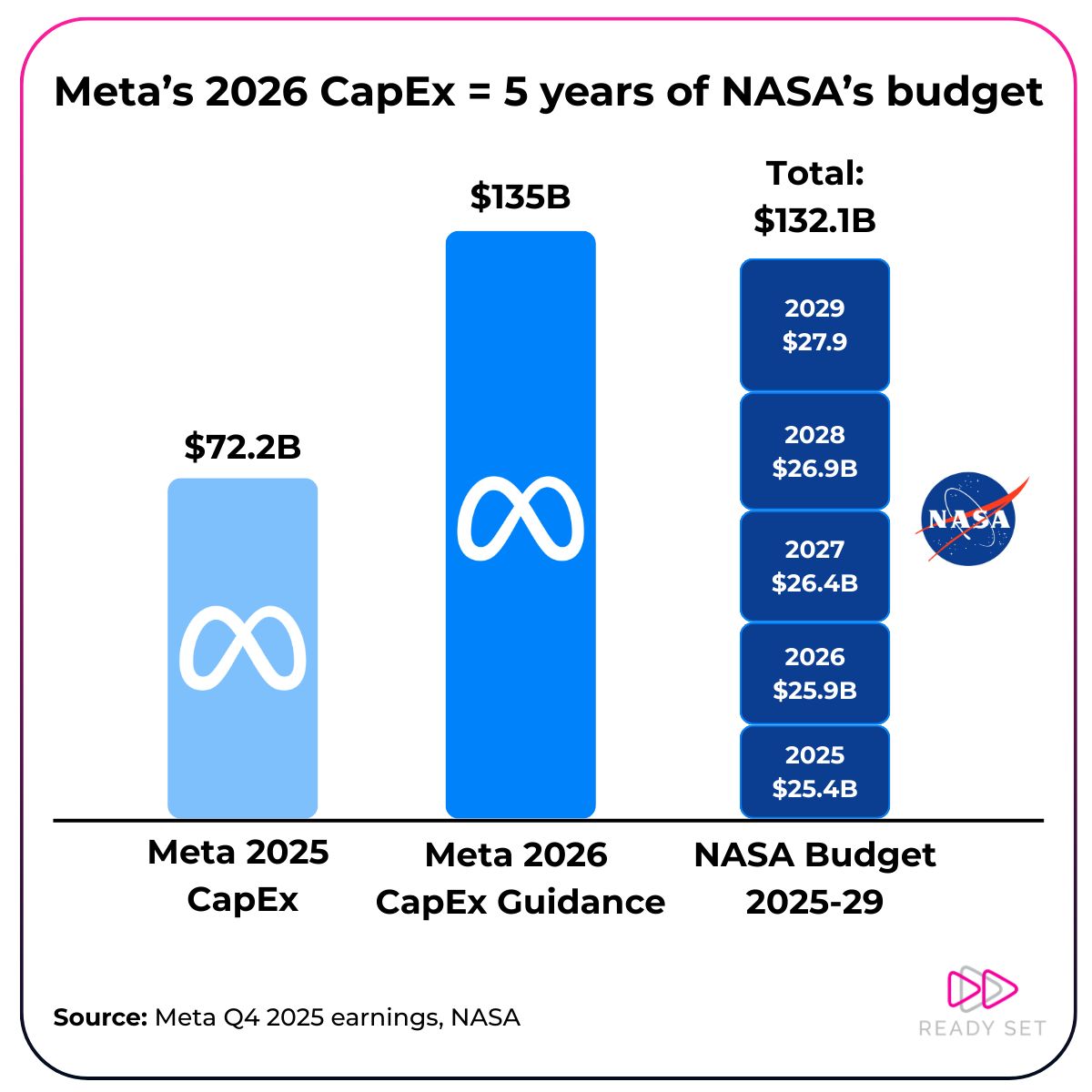
The headline numbers are impressive across the board, but the figure everyone's talking about is the 2026 CapEx guidance: $115B–$135B. Nearly double last year's spending, and more than 5X NASA's annual budget.
And you already know what they're spending it on.
Why should performance marketers care?
Because the AI investments Meta has already made (Andromeda, GEM, Lattice) are paying off. In Q4 they helped drive a 24% surge in revenue, almost $60B.
The ads business was proof of concept. Now they're literally doubling down.
Meta's AI-powered ad engine is only getting better, and to fire on all cylinders it needs a high-volume pipeline of creative to remix and personalize. Anything less is like putting vegetable oil in a Ferrari.
AD INDUSTRY TRENDS
Andromeda Didn't Change the Game Alone

If you've spent any time in performance marketing circles lately, Andromeda gets blamed for everything. CPMs climbing? Andromeda. Creative not delivering? Andromeda. Your coffee tastes weird this morning? Probably Andromeda.
But crediting Andromeda alone is like blaming your slow laptop on the browser when someone swapped out the motherboard, upgraded the RAM, and installed a new operating system.
Meta didn't just update one thing. They evolved four interconnected systems that work together to decide which ads even get a shot at delivery.
The Four Systems Running Meta's Ad Engine
🪐 Andromeda (The Bouncer) scans millions of ad candidates in milliseconds and narrows them down to the few thousand that enter the auction. If your creative doesn't make it past retrieval, your budget is irrelevant.
🧠 GEM (The Super Brain) understands what your ads actually mean. It watches your video, interprets your imagery, reads your copy, and figures out what you're really saying.
♟️ Sequence Learning (The Connector) maps behavior patterns over time to predict what someone's about to do next, queuing up the perfect product pitch before they even know they want it.
📚 Lattice (The Library) unifies signals across every platform, placement, and objective so insights from one campaign can inform delivery in another.
These systems don't work independently. Together, they've fundamentally changed how ads get delivered. The biggest shift: Creative diversity moved from nice-to-have performance tactic to required delivery input.
From Budget-First to Creative-First
The old model was simple: spend more, get more delivery.
The new model flipped the sequence. Your ads must pass Andromeda's retrieval filter before your budget matters. If you keep feeding the system variations of the same thing—same visuals, same hooks, same energy—you're not giving it new tickets into the retrieval pool.
Diversification ≠ Iteration
True creative diversity means distinct signals: different hooks that attract different audiences, different personas telling different stories, different visual styles that are meaningfully separate:
Educational versus entertaining
Urgent versus aspirational
Founder-led versus customer testimonial
It's NOT swapping headline copy on the same image, cropping the same video five different ways, or changing the CTA button color and calling it a "new ad."
Most brands are over-indexing on iteration (refining what works) while underinvesting in diversification (opening new lanes). They're squeezing another 5% out of what's working instead of finding the next thing that works. To sustain growth in 2026, you need both.
What We're Seeing Across Accounts
The system makes faster, more confident decisions now. Ads that underperform get deprioritized immediately—stuck in low-spend purgatory because the algorithm already decided they're not worth scaling.
"Hero ad" strategies are dying fast. The old playbook of finding one great ad and riding it for months doesn't work anymore. Accounts relying on a single creative to carry all the weight fatigue overnight.
The accounts actually growing share two traits:
Simplified campaign structures (fewer ad sets, clearer goals)
A steady flow of conceptually diverse creative
They're not running 47 ad sets with minor targeting tweaks. They're running one or two solid campaigns fed by a steady stream of genuinely different ads.
What We’re Testing in 2026
Treat creative as your primary targeting mechanism. It no longer just persuades, it actively shapes who the system shows your ad to.
❌ Stop thinking "I'll target women 25-45 interested in wellness."
✅ Start thinking "I'll create an ad that naturally attracts women 25-45 interested in wellness by telling stories and featuring someone who they relate to."
One relies on increasingly obsolete targeting strategies. The other gives Meta’s algorithm something concrete to pattern-match against.
Test at the concept level, not the asset level. Group your creative into concept families and look for patterns.
Does the car-POV hook work better than the talking-head hook?
Does before/after storytelling outperform benefit-led messaging?
You're not hunting for one-off winners. You're identifying strategic insights that compound.
The Bottom Line
The fundamentals of great creative haven't changed. Good storytelling, clear value props, authentic testimonials—all that still matters.
What changed is how you get that creative in front of people.
The brands winning in 2026 won't be the ones with the biggest media budgets. They'll be the ones who figured out how to build a creative engine that feeds the machine what it actually wants: volume, variety, and velocity.
FROM OUR PARTNER
🌤️ You’re Invited: 2026 Creative Forecast
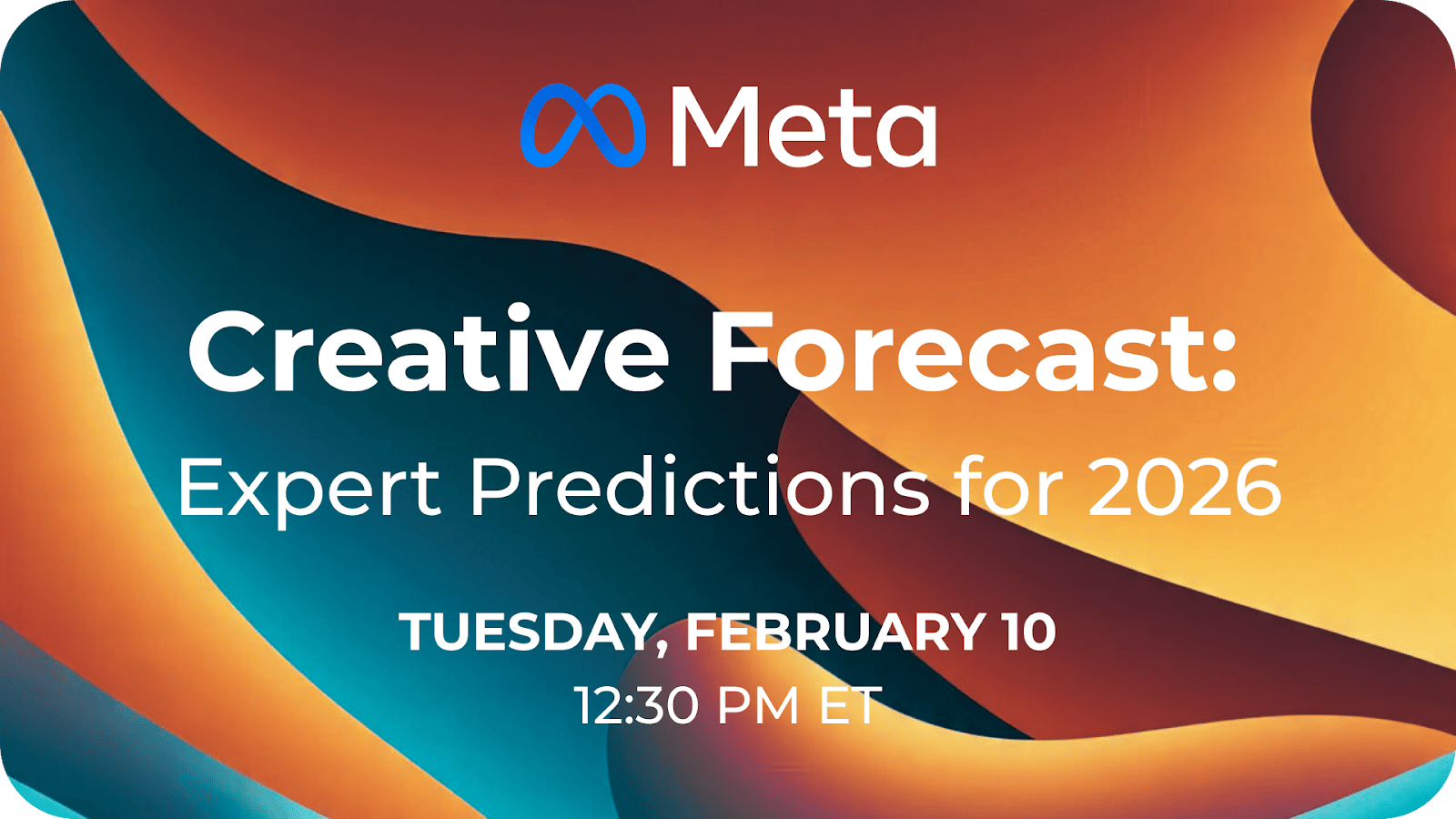
Our very own Sam Makalou is joining creator Sammi Cohen, Meta Creative Shop, and Meta product experts for a live virtual panel forecasting what's ahead for ad creative in 2026.
On the radar: bold predictions on the trends, tech, and creative strategies worth planning for now. Bring an umbrella, because this crew will be making it rain with actionable insights.
It’s happening Tuesday, February 10 @ 12:30 PM ET.
AD OF THE WEEK ✨
Credit building has an image problem. It's all credit scores, APRs, and fine print, the kind of topic most people actively avoid thinking about until they absolutely have to.
This ad from Self flips that entire dynamic by making financial literacy feel like something you'd actually want to engage with.

Brand: Self
Length: 35 seconds
Platform: Meta
WHY IT WORKS 🧠
🎲 It gamifies the invisible. Credit building is abstract and slow. By turning it into a board game with dice rolls and checkpoints, Self makes progress feel tangible instead of overwhelming.
🎨 It owns the aesthetic. Instead of chasing trends or generic finance vibes, the team built a custom visual world from Self's brand palette. The result feels original and impossible to scroll past.
🧠 It bridges complexity without talking down. Credit scores are genuinely complicated. This ad doesn't oversimplify, it just reframes the journey in terms everyone already understands: moving forward, one step at a time.
Sometimes the best way to explain something complicated is to make it feel like play. Self proved you can take a "boring" financial product and turn it into something people actually want to watch—and more importantly, act on.
Thanks for reading!
That’s all for this week. Seeya next time 🫶
What do you think of Funnel Vision? |
 | Dan Moran, Rea Naidoo & Sam Makalou |